Concert tickets · tour dates · upcoming events
Dec 8, 2026 – May 21, 2027
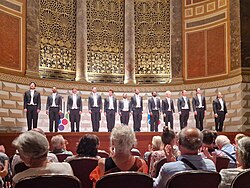
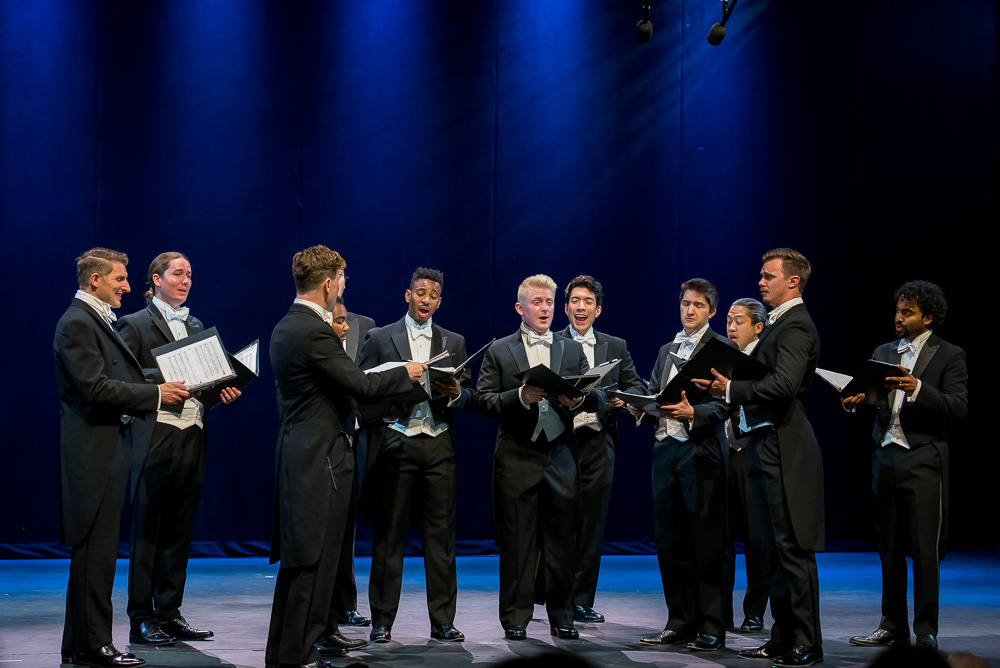
Chanticleer's current live run brings the acclaimed twelve-voice male ensemble to stages where its signature blend of unaccompanied singing fills the room with warmth and precision. Listeners can expect an evening rooted in the a cappella tradition, with music that moves freely across centuries and styles, from Renaissance motets and sacred choral works to spirituals, jazz standards, and contemporary pop arrangements. The atmosphere is intimate even in larger halls, as the voices seem to hang in the air without instrumental support, and the blend of tone is often striking enough to hush an audience between phrases. Those drawn to this kind of concert tend to be longtime choral listeners, students of vocal music, and anyone who appreciates close harmony and careful musicianship, though the ensemble's wide repertoire also welcomes newcomers curious about what twelve voices can achieve together. The set typically shifts pace with intention, alternating reflective, slow-building pieces with brighter, rhythmically driven numbers, so the program feels like a journey rather than a single mood. What makes this run worth noting is its scope: the tour carries the group across a range of cities and a mix of venue types, giving audiences in many communities a chance to hear the ensemble in person. Rather than guess which stop might suit you, look over the dates table below, where each city, venue, and showtime is listed so you can find the performance closest to you and plan your evening.
Merkin Concert Hall7:30 PM
No shows match your filter.
There are no dates on sale at the moment. New dates are listed here the day they are announced.
24 shows · 18 cities
Dec 8, 2026 – May 21, 2027
Ticket prices for Chanticleer shows move with several factors. The city and venue size matter most: a show in a large metropolitan arena will generally cost more than one in a smaller hall, because demand and operating costs differ. Seat location is the other big driver. Floor seats close to the stage, or seats with a clear sightline in the center of a section, usually sell for more than seats at the back or behind the stage. Timing also plays a role. Prices are often set when tickets first go on sale and can shift as the date approaches, depending on demand. This is why two dates on the same tour can cost very differently: a weekend evening in a busy city will often be priced higher than a weekday show in a smaller market, even though the performance is the same.
VIP packages, meet and greets and presales are usually sold as add-ons or early access options. A VIP package typically bundles a ticket with extras such as an early entry time, a merchandise item, or a seat upgrade, though the exact contents vary by show. A meet and greet is a short encounter with the performers and is normally limited in number, so availability differs from date to date. Presales give registered fans or cardholders the chance to buy before general sale. A presale code should come from the artist, the venue or the card issuer, never from a third-party site. Codes from unofficial sources are a common route to scams, so it is safer to check the official channels before entering any code.
Resale marketplaces can be useful when a show has sold out, but prices there can sit above or below face value depending on demand at the time. Before paying, check the section and row carefully against the venue's seating layout, and confirm whether the listing is for the seats you expect. Read the seller's terms regarding refunds and entry conditions. Expect delivery to be by mobile transfer or app rather than a paper ticket, and make sure you can access the transferred ticket on your own device before the event.
A night at a Chanticleer show usually runs for a few hours from the time the doors open to the close of the headline set. For an act of this kind, the gap between doors and the headline set is typically somewhere around an hour or a little more, which gives people time to find their spot, grab a drink and settle in. Support acts vary by date, so the lineup on your ticket or the venue listing is the best guide to who you will see before the main event, and it is worth checking it ahead of time rather than assuming the same bill from one city to the next.
The set itself tends to balance familiar songs with newer material. Longtime listeners can expect the crowd to respond most strongly to the tracks they already know, while the newer work gives the band room to show where its sound is heading. The pacing generally moves between high-energy stretches and slower, more atmospheric moments, so the evening builds rather than staying at one pitch. Production is usually straightforward and focused on the music, with lighting and staging used to support the mood of each song rather than to distract from it.
For practical planning, remember that age policies are set by each individual venue, so check the age requirement for your specific date before you buy tickets. Arriving early helps with entry, security checks and finding a good position, especially at busier shows. Most venues have bag restrictions, so bring only what you need and check the size limits in advance. Earplugs are worth carrying, since the volume at live shows can be high, and many venues offer them at the bar or entrance if you forget.
Chanticleer, the San Francisco-based male vocal ensemble, is known for a wide-ranging a cappella repertoire that runs from Renaissance polyphony to sacred works and contemporary arrangements. Fans often expect to hear Maurice Duruflé's "Ubi caritas" and Franz Biebl's "Ave Maria," along with Renaissance pieces by composers such as Palestrina and Byrd and a selection of seasonal music. The exact setlist changes from night to night, so any specific program should be treated as a snapshot rather than a fixed promise.
Sets usually balance the group's signature sacred and classical showpieces with newer commissions and arrangements, plus occasional deep cuts from the back catalog and popular covers that show off the singers' stylistic range. Fans often compare notes after the show, trading what was sung and what was missed. For the current touring program, the group's official tour listings are the most reliable source.
Chanticleer is a male vocal ensemble founded in San Francisco in 1978 by Louis Botto. The group is built around a core of about a dozen singers spanning countertenor, tenor, baritone, and bass, and its sound rests on blend more than on any single standout voice. The countertenor lines sit high and airy above the tenors, the basses give the chords a firm floor, and the voices are balanced so that a full chord sounds like one instrument. Much of the repertoire is sung unaccompanied, and the singers pay close attention to vowel shape, consonant timing, and the way a phrase swells and releases. The programs move across medieval and Renaissance polyphony, sacred and secular choral works, spirituals, jazz-influenced arrangements, and newly commissioned pieces.
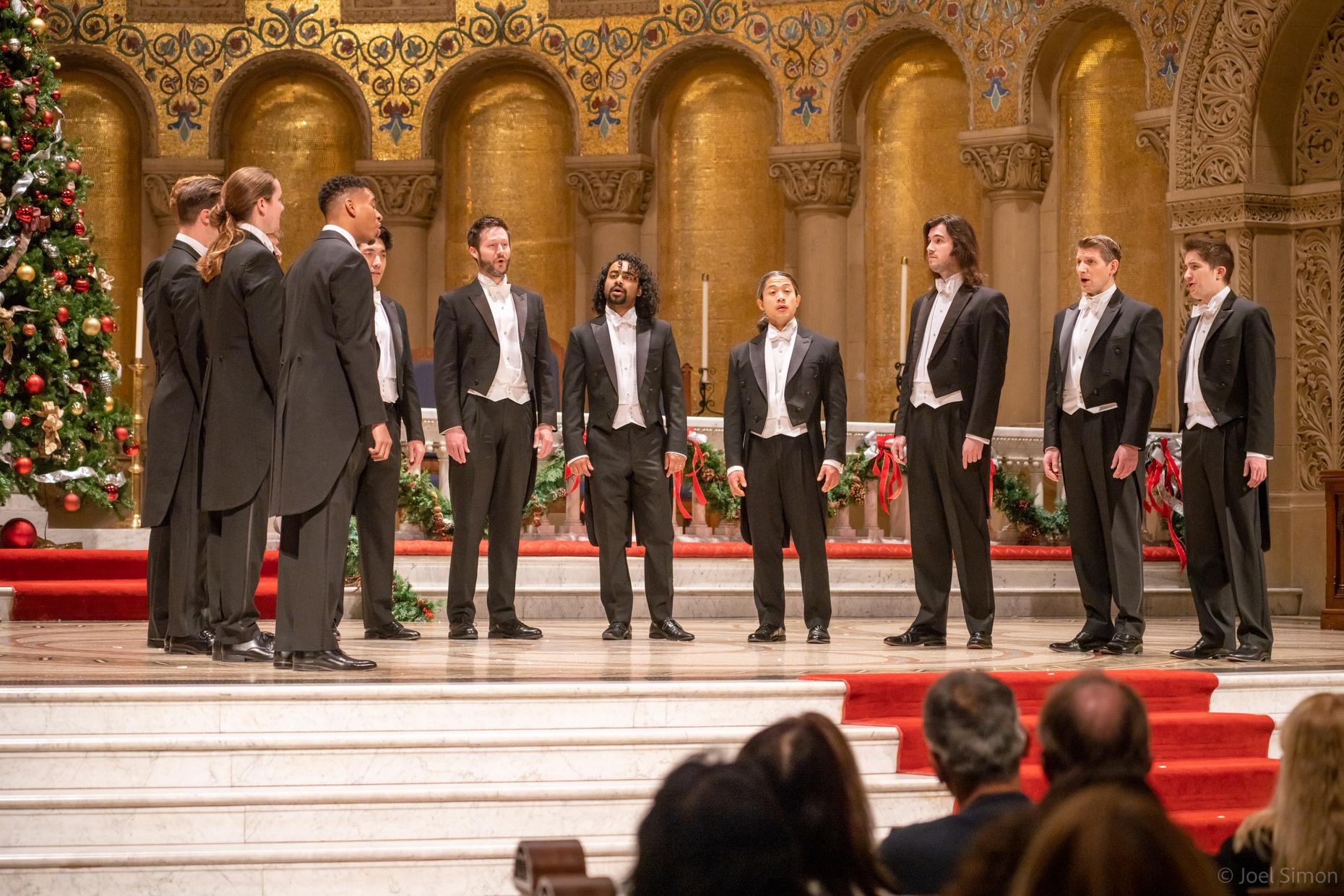
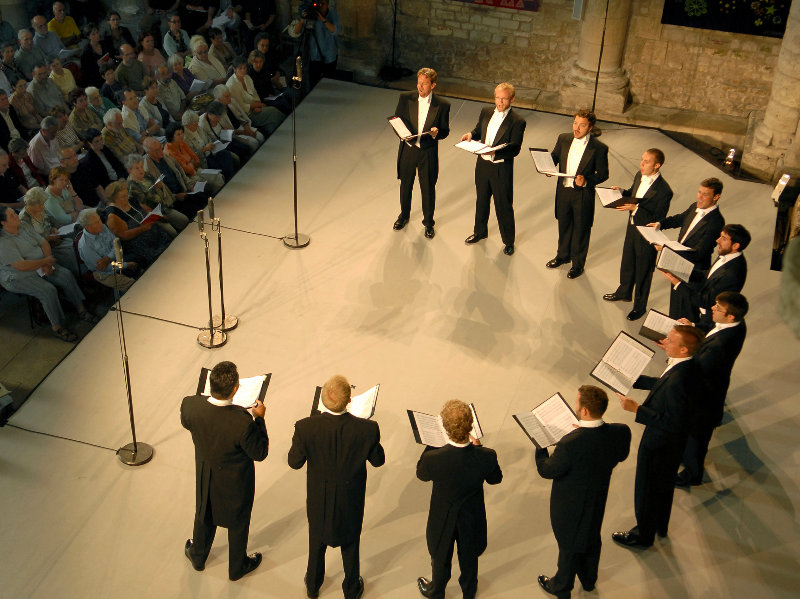
The live show is built around listening. The stage setup is usually simple, so attention stays on the singers, who often move around the hall, enter from the back, or rearrange into smaller groupings within a single piece. Lighting tends to be restrained and serves the music's shape rather than spectacle. Programs are typically organized into thematic sections, with contrasts between old and new repertoire and between sacred and secular material, and the singers sometimes introduce pieces briefly from the stage. The setlist character is varied enough that a single concert can move from quiet chant to rhythmic, playful arrangements. The group performs in a range of venues, from churches and university halls to large performing arts centers, and the acoustic in each room changes how the blend sounds, which is part of the appeal for attentive listeners.
Over its history the ensemble has built a substantial recorded catalogue and has commissioned and premiered a number of works by living composers, which has become one of its defining activities. It has also collaborated with other musicians and ensembles across genres and has appeared at festivals and concert series in North America and internationally. Many of the group's most-performed recordings are associated with its holiday and sacred programs, which have given it a wide audience beyond dedicated choral circles. Fans who want to explore its work further should look for recordings that span different eras of its repertoire, since the range of material is one of the clearest ways to hear how the group approaches style and ensemble balance. Specific album titles, release years, and award details are best confirmed against the group's official discography.
Chanticleer sits within the wider world of professional vocal ensembles, early music performance, and contemporary choral music, and it draws listeners from several overlapping circles. Choral singers and conductors attend for the technical precision, while early music enthusiasts come for the Renaissance and medieval material. Listeners who enjoy sacred music, close harmony, or vocal jazz often find something in the programs, and the group's seasonal concerts bring in audiences who may not attend choral performances at other times of year. The people who tend to enjoy the band most live are those who like to listen closely, who appreciate how a room changes a sound, and who are comfortable with quiet, sustained music as well as moments of lightness and humor. Newcomers to unaccompanied vocal music often find the experience more immersive in person than on recording.
For practical planning, a typical Chanticleer concert runs roughly ninety minutes to two hours including an intermission, though exact lengths vary by program and venue. Many concerts are presented without an opening act, but some presenters add a local choir or chamber group, so check the event listing for the specific bill. The room usually feels calm and focused. Audiences are generally seated and attentive, and applause tends to come at natural pauses rather than between every phrase, so it helps to hold off until the music clearly ends. Arriving early is worthwhile, both to get a good sightline and to settle in before the first piece. Venues with strong acoustics reward a seat toward the center of the hall, where the blend is most even. Because the singers move during some performances, being mindful of sightlines matters less than it would for a seated orchestra, but aisle seats can still offer a closer view.
The upcoming dates listed below show where the ensemble is performing next, with venue information and ticket details for each stop. Browse the schedule to find a concert near you, or plan a trip around one of the programs in a city you have been wanting to visit. Each listing gives the venue, date, and time, so you can check the details before you buy. If you are new to the group, consider choosing a concert with a program that mixes older and newer repertoire, since it offers a good overview of what the ensemble does. Whether you come for the early music, the commissions, or the seasonal programs, the dates below are the best place to start planning your visit.
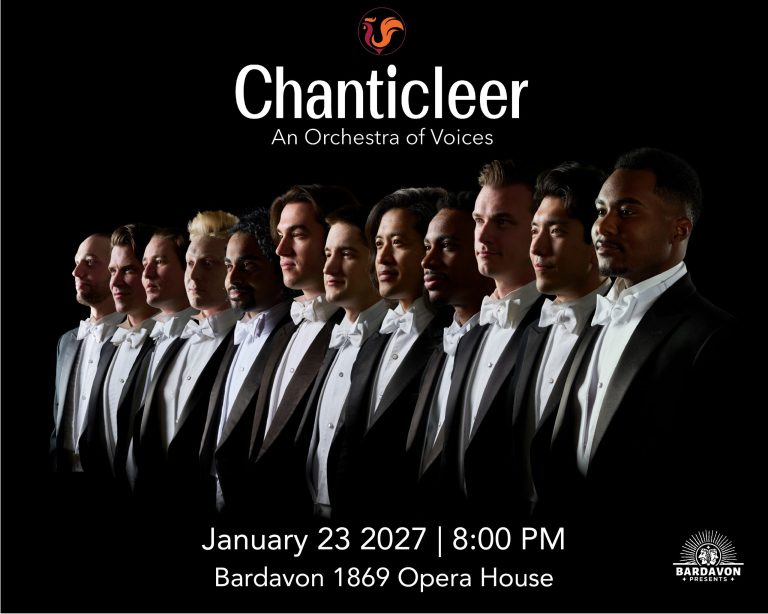
Yes — 24 Chanticleer shows are scheduled for 2026–2027. The run continues Dec 8, 2026 at Orchestra Hall At Chicago Symphony Center in Chicago.
There is no Chanticleer concert on Nov 26, 2026. The tour picks up Dec 8, 2026 at Orchestra Hall At Chicago Symphony Center in Chicago.
All 24 upcoming Chanticleer shows are in the United States, with the most dates in California (16), New York (2), Arkansas (1), Florida (1) and Illinois (1) and 3 more states or regions. No dates outside the United States are listed right now.
The running time of a Chanticleer concert depends on the program, the venue, and whether there is an intermission, so no single length applies to every show. Check the event details for your specific date and venue, and plan for a full evening including travel and any pre-show dinner.
Whether Chanticleer has an opening act depends on the specific date and venue, so I can't name one here. Support acts, when booked, are usually listed on the event page or the venue's calendar. Check the listing for your show before you buy, and if none is named, do not count on a support act and plan your arrival accordingly.
Age rules can differ from one date to another, so this page does not set one policy for every Chanticleer show. Some events are open to all ages, while others may be 18+ or 21+ depending on the venue. Check the age policy on the event listing and the venue's website before buying, and bring valid photo ID if the venue requests it.
The gap between doors opening and the start of the performance varies by venue and by date, so no fixed interval applies to every Chanticleer show. Doors time and the scheduled start are printed on the event listing or ticket confirmation. Plan to arrive when doors open, then check the venue's guidance on seating and late entry.
Chanticleer ticket prices are not listed on this page, because they change by date, venue, seat location, and demand. Face value is set by the venue and promoter, while resale prices and service fees can add to the total. Check the official box office or ticketing site for the current prices of the show you want, and compare the final checkout total before paying.
Whether Chanticleer offers VIP packages or a meet and greet depends on the specific tour date and venue, and this page cannot confirm either for every show. If a package is offered, its contents and price should appear on the event listing or ticketing page. Check there before you buy, and read exactly what is included, since access may be limited.
Presale access and codes differ for each Chanticleer date, so there is no single code or sale schedule to give here. Sale dates are usually posted on the event listing, the venue's website, or the artist's official channels. Sign up for email alerts from the venue or ticketing site, and check the on-sale time for your time zone, since general sale often follows a presale.
If a Chanticleer show is cancelled or postponed, the venue or promoter normally announces the change through the event page and to ticket holders. Postponed tickets usually remain valid for the new date, while cancelled shows are often refunded. Refund terms, fees, and deadlines depend on the seller, so check the ticketing site's policy and keep your order confirmation.